
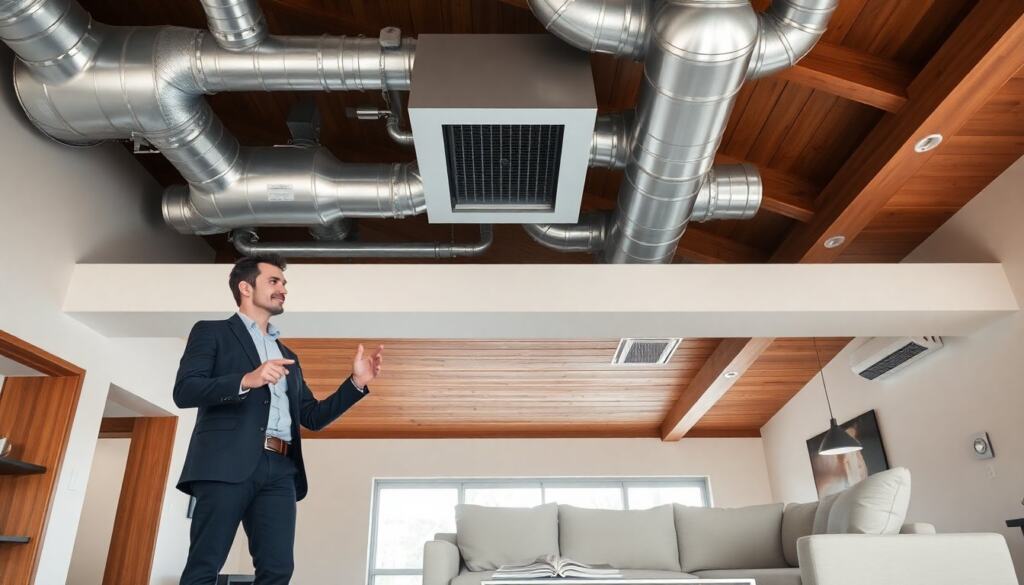
Exposed ductwork in house offers a visible HVAC option that adds industrial style. Homeowners choose it for low ceilings, open plans, or to save on drywall. Designers select exposed ductwork in house to highlight metal finishes and create a modern look. Homeowners should weigh appearance, access, and sound before they commit to exposed ductwork in house.
Key Takeaways
- Exposed ductwork in house provides an industrial and modern aesthetic, making it ideal for open floor plans and high ceilings.
- Choosing exposed ductwork in house can reduce installation costs by eliminating the need for drywall and dropped ceilings.
- Proper sealing and insulation of exposed ductwork in house are essential to maintain HVAC efficiency and prevent energy loss.
- Exposed ductwork in house allows easy access for maintenance and repairs, simplifying upkeep compared to hidden systems.
- Soundproofing measures like internal liners or external wraps can minimize noise generated by exposed ductwork in house.
- Designing duct layout and finishes thoughtfully ensures exposed ductwork in house complements the space without feeling cluttered or cold.
Why Choose Exposed Ductwork? Aesthetics, Function, And When It Works Best
Exposed ductwork in house gives a clear visual statement. It shows metal lines, round pipes, and junctions. Many designers use exposed ductwork in house to create an industrial or modern aesthetic. Owners prefer exposed ductwork in house when they want faster access for repairs. Contractors install exposed ductwork in house where ceiling cavities do not exist or where they want to cut finishing costs.
Exposed ductwork in house can improve airflow in some plans. Shorter duct runs reduce pressure drops. Short runs help HVAC systems work more efficiently. Owners can zone systems easily when they see duct layouts. They can add dampers and access points without cutting ceilings.
Exposed ductwork in house has visual tradeoffs. It fits lofts, basements, and open kitchens. It may not fit formal rooms or historic homes. Designers pair exposed ductwork in house with wood beams, painted ceilings, or pendant lighting. They balance the look with warm finishes to avoid a cold, factory feel.
Exposed ductwork in house works best when homeowners want easy maintenance, visible mechanical character, or a cost approach to retrofits. Builders recommend exposed ductwork in house for high ceilings and industrial conversions. They caution against it in tight, traditional rooms where ducts can make the space feel cluttered.
Design, Materials, And Installation Considerations For Different Rooms
Designers plan exposed ductwork in house by room. They pick round ducts for living rooms and rectangular ducts for kitchens and garages. Round ducts mask joints and create a cleaner line. Rectangular ducts fit tight spaces and may reduce ceiling height more.
Material choice affects cost and look. Galvanized steel offers a classic shine. Aluminum weighs less and resists corrosion. Flexible ducts cost less but look unfinished. Painted ducts let homeowners match ceilings. Insulated ducts reduce heat loss. Designers advise insulating visible ducts when they cross conditioned spaces to avoid condensation and heat loss.
Installation teams follow codes when they install exposed ductwork in house. They fasten ducts to structure with brackets and vibration isolators. Workers add access panels for cleaning and dampers for zoning. They seal joints with mastic or foil tape to prevent leaks. Proper sealing keeps system efficiency high and lowers energy bills.
Room-specific tips help decision making. In living areas, designers keep ducts high and paint them to match the ceiling. In bedrooms, installers add sound insulation and soft covers to reduce noise. In kitchens, they place ducts away from cooking zones to avoid grease buildup. In basements, exposed ductwork in house aids frequent maintenance and simple upgrades.
Lighting and vents matter. Designers align vents to room layout. They choose low-profile registers for clean looks. They add accent lights to draw the eye and make ductwork feel intentional. When homeowners plan exposed ductwork in house, they should review HVAC layout early to avoid clashes with lighting and sprinklers.
Maintenance, Soundproofing, And Cost Tradeoffs: What To Expect Long Term
Owners must plan maintenance for exposed ductwork in house. They should schedule filter changes and duct cleaning more often when ducts run through dusty spaces. Exposed ducts collect dust on the outside. Cleaning workers can reach those surfaces easily. Easy access often reduces cleaning labor compared with hidden systems.
Noise can increase when ducts run exposed. Sound travels along metal surfaces. Homeowners can add internal liners or external wrap to reduce noise. They can add sound baffles at registers. Placing insulation around the plenum reduces vibration. Contractors can install flexible connectors to isolate the ducts from the structure and lower noise transfer.
Cost tradeoffs vary. Exposed ductwork in house often lowers initial finish costs. It removes the need for dropped ceilings and drywall repairs. But, visible ducts may need higher-grade finishes or paint to meet aesthetic goals. Owners may pay for insulated or painted ducts, and for sound treatments. Over time, easier access may lower repair costs but raise cleaning frequency.
Energy performance depends on installation quality. Properly sealed exposed ductwork in house performs similarly to hidden ducts. Poor sealing leads to leaks and energy loss. Insulating ducts that pass through unconditioned spaces keeps heating and cooling efficient. Owners should ask for a duct test or pressure test to verify tightness.
Safety and code items require attention. Installers must maintain clearance for fire suppression systems and comply with local codes. Metal ducts should meet fire ratings if they pass through certain areas. Homeowners should verify code compliance during planning to avoid retroactive costs.
Overall, exposed ductwork in house offers clear benefits for style, access, and some costs. It requires intentional design, proper sealing, and routine care. When homeowners plan for these items, exposed ductwork in house can deliver both visual impact and long-term value.