Industrial style decor adds raw texture and clear form to homes. It pairs metal, wood, and concrete with open layouts. Designers and homeowners use this look to add honest material and simple lines. The style fits modern living because it mixes utility with comfort. This guide shows what industrial style decor means and how to apply it in real rooms.
Key Takeaways
- Industrial style decor highlights raw materials like metal, wood, and concrete to create honest, functional spaces that blend utility with comfort.
- Core materials such as exposed brick, steel, and aged wood paired with neutral colors define the industrial look and allow warm accents to stand out.
- Layered lighting, open shelving, and durable furnishings like leather and heavy linen enhance the industrial style’s balance between practicality and warmth.
- Sustainable choices, including reclaimed wood and low-VOC finishes, are increasingly important in modern industrial style decor for environmental responsibility.
- Applying industrial style room-by-room involves mixing core materials with soft textiles, warm accents, and purposeful storage to maintain a cohesive yet lived-in atmosphere.
What Is Industrial Style And Why It Works Today
Industrial style decor grew from converted factories and warehouses. Early adopters kept exposed structure and simple finishes. They left beams, ducts, and brick visible. The result shows how buildings are made. Today designers use industrial style decor to add character to new builds and older homes. The look works because people value honest materials and clear form. It also fits open plans and minimal clutter. Many builders and designers choose industrial style decor for its flexible backbone. They pair it with plants, rugs, and warm lighting to soften the edges. The style works in small apartments and large lofts. It uses scale and texture to create interest without excess. People who like industrial style decor often prefer durable surfaces and furniture that age well. The look encourages functional choices. It also supports a neutral palette that allows art and textiles to stand out. In 2026, sustainable material choices shape how people execute industrial style decor. Reclaimed wood, low-VOC finishes, and durable metal finishes help reduce waste. Many suppliers now list material origins and maintenance needs, so designers can match aesthetic goals with environmental goals. Overall, industrial style decor offers a clear visual language. It gives rooms structure, honest material, and flexible styling options.
Core Materials, Colors, And Furnishings That Define The Look
Industrial style decor centers on a short list of materials. Exposed brick, poured concrete, steel, and aged wood appear most often. These surfaces provide texture and visual weight. Designers balance them with soft textiles and warmer tones. The color range stays close to neutrals. Gray, black, driftwood brown, and muted white form the base palette. Accent colors appear in leather, copper, or faded textiles. Metal finishes vary from matte black to brushed steel. Each metal choice sets the room tone. Matte black adds contrast and drama. Brushed steel reads cooler and cleaner. Brass or copper adds warmth and a vintage note. Furnishings follow simple shapes. Tables show solid tops with open metal frames. Chairs show slender metal legs and leather or canvas seats. Lighting plays a key role in industrial style decor. Pendant lights, task lamps, and floor lamps with visible bulbs emphasize function. Designers often use adjustable fixtures to target work zones and seating areas. Rugs and textiles soften hard floors. A large rug can ground a seating group and add color. Curtains or woven shades control light and add warmth. Storage serves both function and display. Open shelving in metal and wood keeps items accessible and visual. Closed storage uses flat-front cabinets or steel lockers. Designers choose durable upholstery fabrics like leather or heavy linen. Those fabrics resist wear and show natural aging that suits industrial style decor. Small accents include reclaimed hardware, factory carts as coffee tables, and vintage signage. Those elements add narrative without clutter. Finally, care and finish matter. Sealed concrete floors need proper cleaners. Metal needs occasional rust prevention. Wood benefits from simple oil or wax treatments. With proper care, the core components of industrial style decor age with character rather than fail.
How To Design Industrial Rooms (Room‑By‑Room Practical Tips)
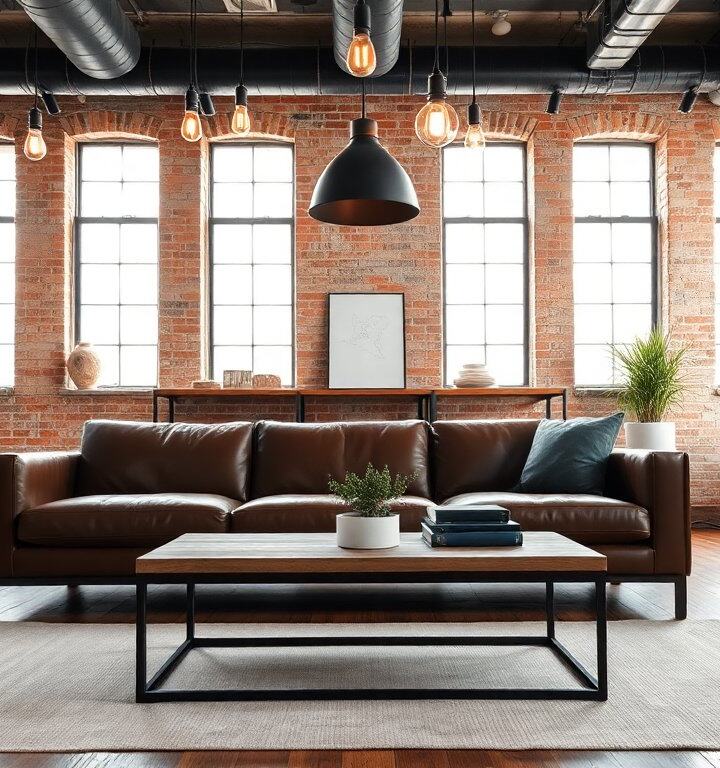
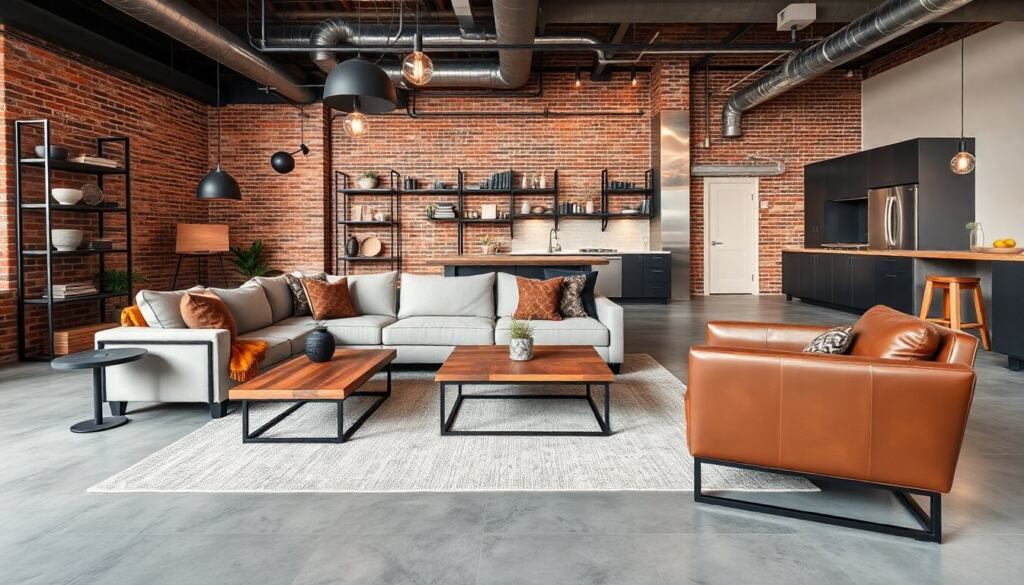
Living room: Start with a durable sofa and a metal-based coffee table. Place a large rug to define the seating area. Add layered lighting: a pendant, a floor lamp, and task lights. Place shelving against a brick or plaster wall for display. Use one or two warm accents, such as leather cushions or a wood side table, to temper the metal tones.
Kitchen: Expose the hood or vent when possible and use open shelving for frequent items. Choose stainless or brushed metal appliances to match cabinet hardware. Install a concrete or butcher-block countertop for a tactile surface. Use pendant lighting over the island and under-cabinet lighting to aid prep work. Keep cabinet fronts simple and add a metal or wood island for extra work space.
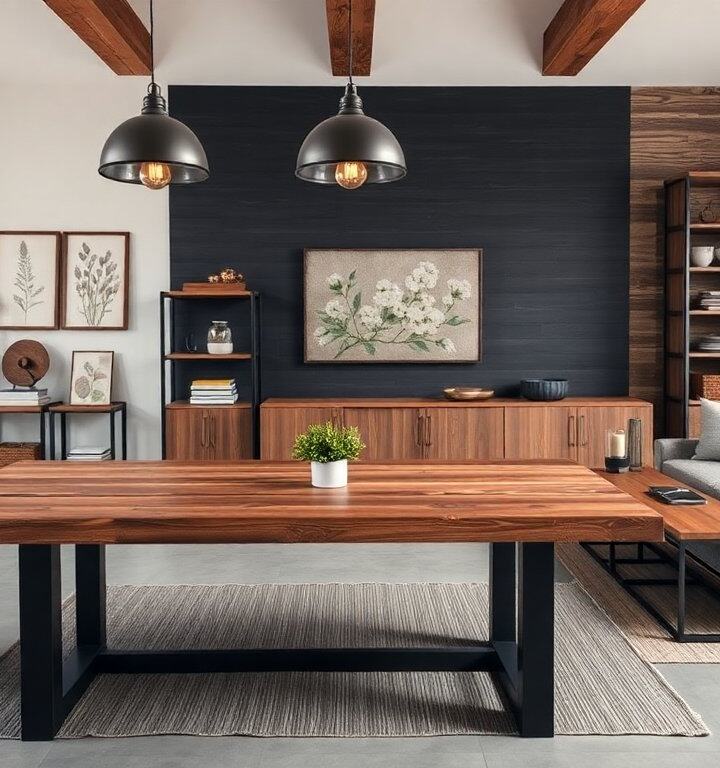
Dining room: Choose a long table in reclaimed wood or solid wood with a simple metal base. Pair the table with mixed seating, benches, metal chairs, or leather seats, to create an edited, lived-in look. Center a statement light above the table. Keep wall decor minimal and choose pieces that repeat the room palette.
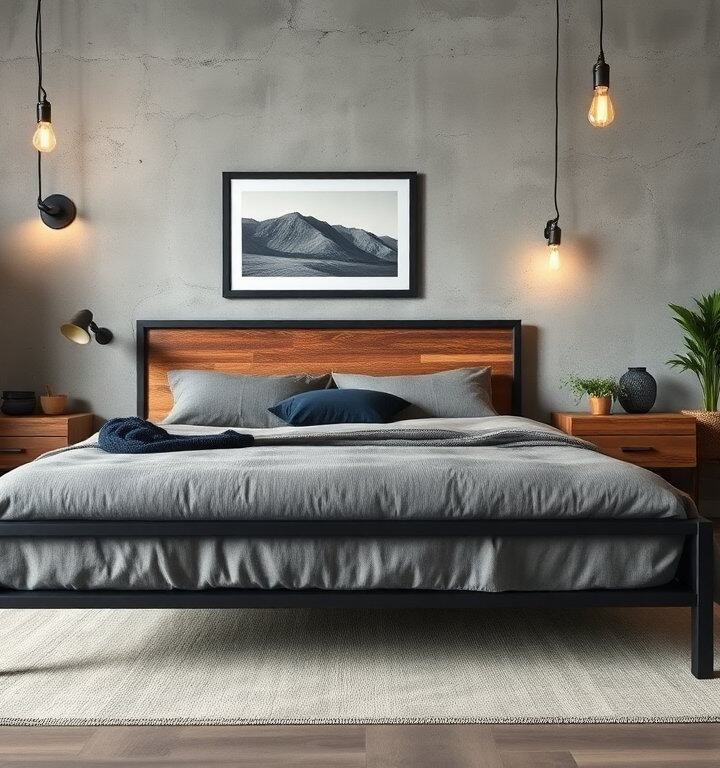
Bedroom: Limit material variety to avoid a cold feel. Start with a warm wood headboard or a leather headboard. Use soft bedding in neutral tones and add a textured throw. Place bedside lamps with metal bases and fabric shades. Add a rug that extends beyond the bed to warm the floor.
Home office: Choose a solid desk with metal legs and clear surface area for work. Add task lighting that can move with the user. Use open shelving for reference items and a filing cabinet with a simple finish for papers. Include a comfortable chair with durable upholstery to support long hours.
Bathroom: Use concrete or stone-look tiles and metal fixtures in matte black or brushed nickel. Install open shelving for towels and a vessel sink on a reclaimed wood vanity for contrast. Keep grout lines tight and choose easy-clean finishes.
Entry and hallway: Use hooks on metal backplates and a narrow console with a metal frame to create function. Add a runner and a mirror with a metal frame to enlarge the space. Keep storage purposeful and visible to maintain the honest look.
Decor tips across rooms: Repeat two to three core materials to unify the home. Layer lighting and textiles to add warmth. Add plants to bring life and soften surfaces. Keep accessories curated and meaningful to avoid clutter. These choices help maintain the direct, lived-in feel that defines industrial style decor.