
A metal king bed frame combines structural strength, aesthetic flexibility, and practical space use. Many shoppers choose a metal king bed frame for its durability, resistance to pests and warping, and the range of styles—from industrial to minimalist—that coordinate with contemporary and traditional interiors. This guide expands on the benefits and trade-offs, important features to evaluate, popular styles, precise measuring and compatibility checks, and hands‑on assembly and maintenance advice so you can confidently choose a metal king bed frame that suits your mattress type, room layout, and budget.
Key Takeaways
- A metal king bed frame offers durable support and stylish options suitable for modern, industrial, and traditional rooms.
- Check materials like steel or iron, finish quality, and sturdy construction features such as welded joints and reinforced corners when choosing a metal king bed frame.
- Ensure the frame’s slat system and center support meet your mattress type and weight for optimal comfort and mattress longevity.
- Measure room dimensions, doorways, and mattress compatibility carefully before purchase to guarantee a proper fit for your metal king bed frame.
- Follow assembly instructions precisely and perform regular maintenance, such as tightening bolts and touching up paint, to extend the life of your metal king bed frame.
- Metal king bed frames save space with slimmer profiles and can include various styles, from minimalist to farmhouse, to match your decor.
Why Choose a Metal King Bed Frame — Benefits and Trade-Offs
Choosing a metal king bed frame often centers on three advantages: durability, versatility of design, and space efficiency. Metal frames—especially those built from quality steel—tolerate heavy loads without sagging, are largely impervious to insects and moisture-related warping, and can be manufactured with thinner profiles to free up floor area and under‑bed storage. Design-wise, metal can be formed into ornate headboards, sleek minimalist rails, or rugged industrial silhouettes, so it adapts to many decorating schemes.
The trade-offs are practical rather than aesthetic. Metal frames can transmit noise if fasteners loosen or if metal rubs against metal; selecting frames with solid welds, rubberized slat rests, or noise‑damping hardware reduces this problem. Metal can also feel cooler to the touch than wood and may chip or scuff over time—proper finish (powder coating) and periodic touchups help prevent rust and visible wear. Finally, very lightweight metal frames can flex under uneven loads, so look for adequate center support and heavier gauge tubing for couples or heavier sleepers when evaluating a metal king bed frame.
Key Features To Look For When Buying A Metal King Bed Frame
When shopping, prioritize structural features that impact comfort and longevity. Key elements include tube gauge (thicker gauge for greater rigidity), quality of welds and joints, and whether fasteners are standard metric/imperial sizes that are easy to replace. Evaluate the finish: powder coating resists chips and corrosion better than basic paint. Look for frames with integrated headboard mounting brackets if you plan to attach an existing headboard.
Support details matter: slat spacing, slat material, and the presence of a center rail with legs affect mattress performance; closely spaced slats or a solid platform are best for foam and hybrid mattresses to prevent premature sagging. Pay attention to clearance height (for storage or bed steps), noise‑reducing features (plastic caps, rubber grommets), and included hardware—some frames include all bolts and tools, others require common tools you may already own. Finally, check the warranty and return policy; a longer warranty or clear replacement parts policy often signals better build confidence from the manufacturer of a metal king bed frame.
Materials, Finish, And Structural Construction
Steel and iron are the most common materials. Steel frames tend to balance strength and lightness and are often made from tubular steel; cast or wrought iron frames are heavier and offer a more traditional or vintage look. For strength, look for frames that specify tube dimensions and gauge, and for visible reinforcement at corners or along the center rail. Weld quality is a key indicator: smooth, continuous welds usually outlast spot‑welds or rivets.
Finish choices affect both appearance and longevity. Powder coating provides a tough, uniform layer that resists rust and scratching better than standard paint. Some manufacturers add clear protective topcoats to maintain gloss. If you plan to use a two‑tone or mixed‑material frame (metal with wooden slats or accents), check how the different materials are joined—mechanical fasteners and slotted connections are easier to service than permanent adhesives. Always inspect product images and customer photos for close‑up views of welds, joints, and finish quality before committing to a metal king bed frame.
Support Systems: Slats, Center Rails, And Weight Capacity
The support system determines mattress feel and long‑term performance. Slats can be metal, wood, or composite; important metrics are slat width, thickness, and spacing. For foam and hybrid mattresses, aim for slat spacing no greater than the manufacturer’s recommendation (often around 3 inches for memory foam, though check your mattress manual). Solid platforms or bunkie boards provide the most uniform support when required.
On king size frames, a center rail with one or more supportive legs is essential to prevent mid‑span flex and premature mattress wear. Check the overall weight capacity rating of the frame and compare it to the combined weight of sleepers, mattress, and any topper. Adjustable support systems that allow adding extra legs or tightening rails are a useful feature for future‑proofing your purchase. Always confirm slat attachment points—screwed or bolted slats resist movement better than simple slot‑in designs when used with a heavy mattress on a metal king bed frame.
Popular Types And Styles: From Industrial To Minimalist
Metal king bed frame styles cover a wide spectrum. Industrial frames emphasize raw finishes, exposed bolts, and darker patinas, pairing well with reclaimed wood and concrete textures. Minimalist frames use slim profiles, concealed fasteners, and monochrome finishes for a light, airy bedroom. Farmhouse‑inspired metal king bed frames often combine painted metal with wooden headboards or rails to bring warmth to the structure.
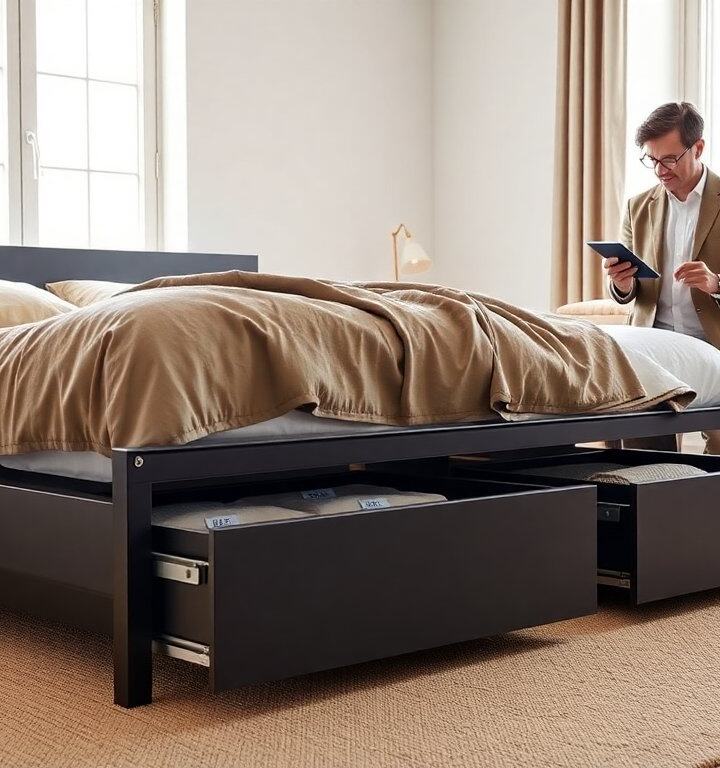
Other style options include: vintage‑inspired iron frames with scrollwork for traditional interiors; mid‑century modern designs that keep lines clean and low profile; and platform frames that remove the need for a box spring to create a contemporary, low‑slung look. Consider practical style features, too: integrated storage rails, headboard mounting points, or removable panels that facilitate transport. Match the frame’s visual scale to your room size—large, heavy frames can overwhelm small rooms, while very slim frames may look out of place in a large master bedroom unless balanced with substantial bedding or headboard elements.
How To Measure, Confirm Fit, And Check Mattress Compatibility
Accurate measurements prevent delivery headaches. Start by measuring the mattress you plan to use (a standard king mattress is 76 by 80 inches) and then add the frame’s outer dimensions—manufacturer pages usually list both inner and outer measurements. Measure room width and length and subtract clearance needed for walking around both sides (commonly 24–36 inches). Also measure doorways, stairwells, and elevator dimensions to verify you can move the boxed frame or assembled pieces into the room.
For mattress compatibility, check slat spacing, platform recommendations, and center support. If your mattress warranty has support requirements (for example, maximum slat gaps or prohibition of slatted bases), confirm the metal king bed frame meets those terms. When pairing an existing headboard or footboard, confirm attachment points and bolt hole spacing. If shipping or returns are difficult, consider frames that ship in smaller parts and assemble onsite. Finally, plan for ceiling height if you choose a tall headboard or canopy-style frame so you avoid a cramped look.
Assembly, Maintenance, And Longevity Tips For Metal Frames
Preparation makes assembly smoother: clear the room, organize hardware by type, and have basic tools on hand (ratchet set, Allen keys, rubber mallet). Follow instructions in the recommended order and snug bolts progressively rather than fully tightening one at a time to ensure correct alignment. Use thread locker gel on bolts that carry movement to reduce squeaks; place rubber caps or felt pads where metal meets metal to dampen noise and protect floor finishes.
For routine maintenance, inspect and retighten fasteners every few months, especially after moving the bed or if you notice creaks. Clean the frame with mild soap and water, avoid abrasive cleaners that can strip protective coating, and immediately touch up chips with matching paint to prevent rust. If you notice surface rust, sand lightly, apply rust inhibitor, and repaint the area. Address loose welds or structural damage promptly—small repairs can prevent larger failures. With basic preventative care and occasional tightening, a well‑made metal king bed frame will provide stable support and a long service life.