How to clean stainless steel appliances without streaks ranks high on many homeowners’ lists. This guide shows clear steps, safe supplies, and quick fixes. It gives concise instructions that any reader can follow. It focuses on results and ease. It avoids fluff and gives direct, usable advice for streak-free stainless steel.
Key Takeaways
- Cleaning stainless steel appliances without streaks requires wiping with a microfiber cloth along the grain and drying surfaces immediately to avoid residue marks.
- Use mild soap and warm water for daily cleaning, followed by rinsing and drying with a dry microfiber cloth to maintain a streak-free shine.
- For deep cleaning, dilute white vinegar to remove oils and use baking soda with a damp sponge for stuck-on grime, always drying immediately after cleaning.
- Avoid abrasive pads, bleach, and oil-based polishes as they leave streaks and damage stainless steel surfaces.
- Maintain streak-free stainless steel by cleaning spills promptly, avoiding paper towels, and using a dedicated cleaning kit with safe supplies like vinegar, mild soap, and isopropyl alcohol.
- If streaks persist, apply isopropyl alcohol on a microfiber cloth and dry immediately; for scratches, use a non-abrasive stainless steel polish and always test cleaners on a hidden spot first.
Why Stainless Steel Shows Streaks — And How To Prevent Them
Stainless steel shows streaks because water, oil, and cleaners leave residues on the surface. Light reflects unevenly off those residues and shows marks. Fingerprints add natural oils that attract dust and grime. To prevent streaks, they should dry surfaces quickly after cleaning. They should use a lint-free cloth and move with the grain. They should avoid mixing cleaners that leave films. They should test any cleaner on a hidden spot first. They should clean regularly so grime does not build up and require harsher products.
Essential Tools And Safe Cleaning Supplies For Streak-Free Results
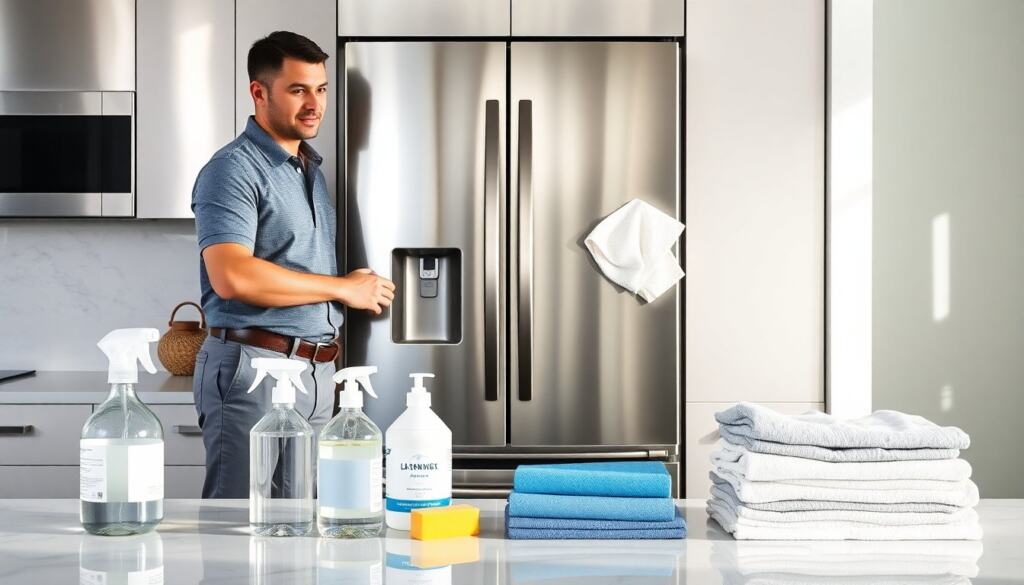
Microfiber cloths provide the best balance of absorbency and lint control. Spray bottles let users apply liquids lightly and evenly. A soft sponge or non-scratch pad removes stuck-on residue. Isopropyl alcohol and white vinegar remove oils without leaving films. Mild dish soap breaks grease and rinses clean. A dry microfiber or polishing cloth buffs to a shine. Commercial stainless steel cleaners work if they state no wax or film. They should avoid abrasive pads, bleach, and oil-based polishes that leave streaks. They should keep products labeled safe for stainless steel.
Step-By-Step Streak-Free Cleaning Method
Follow a simple sequence and keep motions consistent. Work on one panel at a time. Use light pressure and follow the grain. Rinse and dry fully before moving to the next panel.
Daily Cleaning: Mild Soap, Microfiber, And Technique
They wet a microfiber cloth with warm water and add a drop of mild dish soap. They wipe along the grain to remove fingerprints and light grease. They rinse the cloth and wipe again to remove soap. They dry with a clean, dry microfiber cloth using long, even strokes with the grain. They finish with a light buff to restore shine. They repeat weekly or as needed to prevent buildup.
Deep Cleaning: Vinegar, Baking Soda, And Commercial Cleaners
They spray white vinegar diluted with water onto the surface for oil removal. They wipe along the grain and dry immediately. For stuck-on grime, they sprinkle baking soda on a damp sponge and rub gently with the grain. They rinse completely and dry. They use a commercial stainless cleaner for heavy stains and follow label directions. They always buff off any residue with a dry microfiber cloth to prevent streaks.
Maintenance, Long-Term Care, And Troubleshooting Common Problems
They set a small routine to keep surfaces clean and reduce deep clean frequency. They clean spills quickly and dry them. They avoid paper towels because they leave lint. They keep a kit with microfiber cloths, a spray bottle of diluted vinegar, mild soap, and isopropyl alcohol for quick touchups.
Fixing Persistent Streaks, Cloudiness, And Light Scratches
If streaks persist, they wipe the surface with isopropyl alcohol on a microfiber cloth and dry immediately. If cloudiness remains, they repeat a vinegar rinse and buff dry. For light scratches, they use a non-abrasive polish made for stainless steel and rub with the grain. They avoid aggressive scrubbing that deepens scratches. For tough stains, they consult the appliance manual or contact the manufacturer for approved cleaners. They test any new product on a hidden spot first.