
Industrial style ceiling fans provide strong airflow and a clear aesthetic. Buyers pick industrial style ceiling fans for durability, simple lines, and visible mechanics. This article lists benefits, key features, sizing, placement, and safety points. It aims to help buyers choose a fan that lasts and looks right in 2026.
Key Takeaways
- Industrial style ceiling fans combine strong airflow with a mechanical, durable aesthetic ideal for large rooms and high ceilings.
- When choosing industrial style ceiling fans, consider motor power, blade size, material, controls, and suitability for damp or wet locations to ensure lasting value.
- AC motors offer cost-effective reliability, while DC motors provide better energy efficiency and speed control; check CFM and motor features for optimal performance.
- Proper sizing and placement of industrial style ceiling fans are crucial; match blade span to room size and position fans to enhance air circulation and avoid dead zones.
- Safe installation involves complying with local electrical codes, using proper mounts, checking damp/wet ratings, and balancing blades to minimize wobble and prolong fan life.
Why Choose An Industrial Style Ceiling Fan? Key Benefits And Aesthetic Appeal
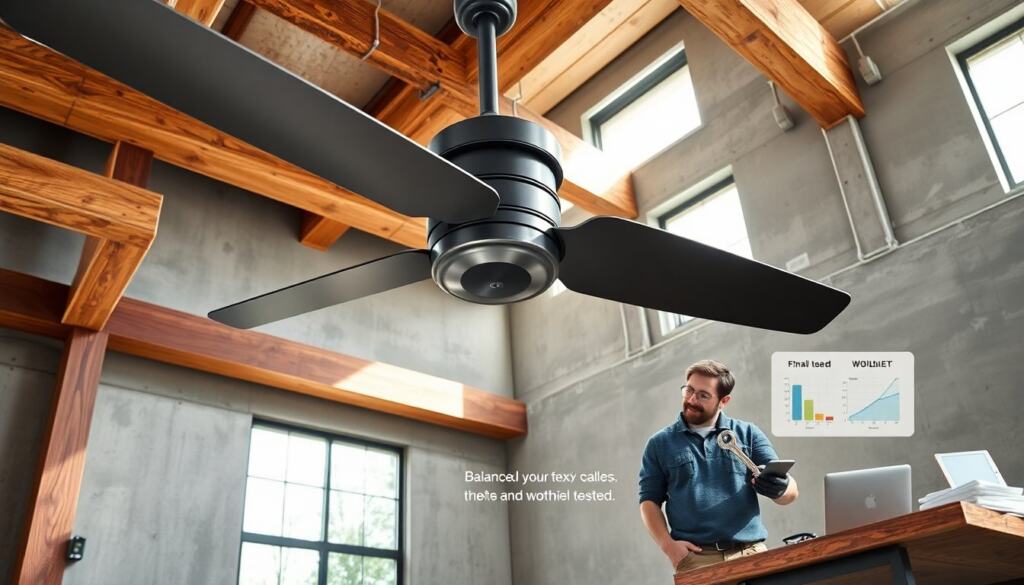
Industrial style ceiling fans suit large rooms and high ceilings. They deliver powerful airflow. Designers use them to add an honest, mechanical look. Homeowners value their metal finishes, exposed hardware, and wide blades. Builders appreciate their long-life motors and simple service access. Many industrial fans use open cages or visible mounts to match warehouse or loft decor. They pair well with exposed beams, concrete, and wood. Buyers who want function and a clear visual statement often choose industrial style ceiling fans.
Key Features To Look For When Buying An Industrial Fan
Buyers should compare motor power, blade size, material, finish, and control options. They should check ratings for damp or wet locations. Warranties and replacement parts affect lifetime cost. The cost range varies widely, so buyers match features to budget and use. Look for models with easy blade removal and service access. Consider energy use and speed settings. Controls can include pull chains, wall switches, remotes, or smart home integration. Prioritize features that match the room size and local climate.
Motor Types And Performance Metrics
Industrial style ceiling fans use AC or DC motors. AC motors cost less and run reliably. DC motors use less power and offer finer speed control. Buyers check cubic feet per minute (CFM) to judge airflow. A higher CFM means stronger air movement. Look for CFM per watt to assess efficiency. Check motor bearings and thermal protection. Fans with sealed bearings require less maintenance. Buyers who run fans for long periods should favor efficient motors and verified CFM ratings.
How To Size And Place An Industrial Ceiling Fan For Optimal Airflow
Correct sizing ensures efficient performance. Measure room length and width first. Match blade span to room area. A 44-54 inch fan suits medium rooms. A 56-72 inch fan suits large rooms and open plans. Check the fan CFM against room volume for accurate results. Buyers should avoid undersized fans that run hard but move little air. Placement affects circulation. Position fans to promote a steady cross-breeze and to avoid dead zones.
Installation, Wiring, And Safety Considerations (Damp/Wet Ratings, Balancing)
Proper installation ensures safety and long life. Installers follow local electrical codes and secure mounts to a ceiling joist or rated brace. Fans require correct wiring for fan and light circuits when applicable. Buyers check UL or ETL listings for damp or wet locations before placing a fan outdoors or in a covered porch. Balancing reduces wobble and wear. Use supplied balance kits or replace warped blades. Tighten all fasteners and check for vibration after 24 hours of operation. Schedule professional service for complex wiring or high ceilings.