Metal patio furniture offers durable seating and clear style for outdoor spaces. The guide explains benefits, choices, and care for metal patio furniture. Readers learn how to pick size, style, and finish. The guide shows simple maintenance steps to protect surfaces and prolong life. It helps readers match furniture to their patio and climate.
Key Takeaways
- Metal patio furniture offers durability and strength, making it ideal for high-traffic outdoor areas and different climates.
- Choosing between aluminum, steel, and wrought iron depends on factors like weight, rust resistance, style, and maintenance needs.
- Measure your outdoor space carefully and consider style, comfort, and climate-suitable finishes when selecting metal patio furniture.
- Regular maintenance, including cleaning, inspecting finishes, and protecting cushions, extends the lifespan and appearance of metal patio furniture.
- Use breathable covers and store lighter metals indoors during harsh weather to prevent damage and rust.
- Address rust promptly by sanding and repainting small spots, or seek professional help for severe corrosion to keep furniture functional and attractive.
Why Choose Metal Patio Furniture? Benefits, Durability, And Use Cases
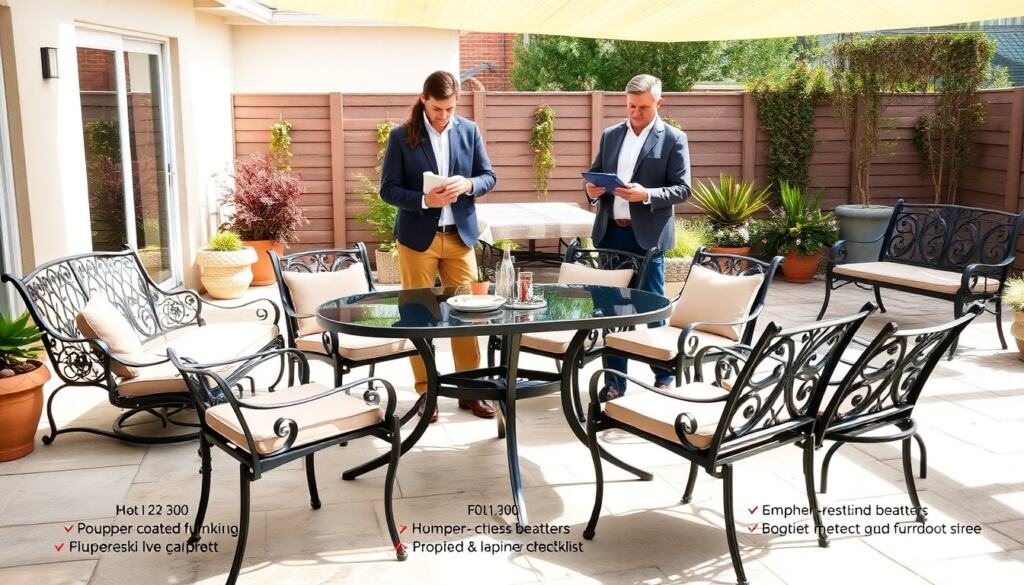
Metal patio furniture resists wear and holds form under frequent use. Homeowners and property managers select metal patio furniture for strength, low maintenance, and lifespan. Metal seats suit high-traffic patios, pool areas, and commercial terraces.
Metal frames carry more weight than many wood or plastic frames. Metal resists pests and rot. Many metal finishes resist fading and flaking. Metal pieces also allow slimmer profiles for modern looks.
Buyers should weigh weight, finish, and climate. Light metals like aluminum move easily. Heavier metals like steel and wrought iron stay put in wind. Metal tables heat in direct sun. Cushions and shade solve that issue. Buyers who want a long service life often choose powder-coated finishes and stainless fasteners.
Common use cases include dining sets, lounge chairs, benches, and folding chairs. Restaurants and hotels prefer metal patio furniture for frequent turnover and cleaning. Homeowners often pick mixed sets that pair metal frames with wood or sling seats to soften the look.
The next section lists common metal types and their tradeoffs so readers can match metal patio furniture to their needs.
Common Metal Types: Aluminum, Steel, And Wrought Iron — Pros And Cons
Aluminum: Aluminum weighs little and resists rust. Manufacturers shape aluminum easily, so buyers find many styles. Aluminum suits coastal areas when it uses a quality powder coat. Aluminum may dent under heavy impact.
Steel: Steel offers high strength at a moderate price. Galvanized or stainless steel resists corrosion. Painted steel may chip and need touch-ups. Steel weighs more than aluminum and suits fixed seating and large tables.
Wrought Iron: Wrought iron provides a classic look and strong structure. Wrought iron holds detail and sculpted lines. It resists deformation but can rust without proper finishes. Buyers should expect the highest weight with wrought iron sets.
Tradeoffs: Aluminum wins for lightness and rust resistance. Steel wins for cost-to-strength balance. Wrought iron wins for style and long-term rigidity. Buyers should check warranty and finish type before they buy metal patio furniture. They should test moving the pieces to confirm weight and handling.
How To Choose: Size, Style, Comfort, And Matching Your Outdoor Space
Measure the outdoor area before shoppers buy metal patio furniture. They should leave at least 30 inches for chair clearance. They should leave 36 inches behind dining chairs for passage. Shoppers should sketch the layout with key dimensions.
Match the furniture scale to the space. Small bistro sets fit narrow balconies. Large dining sets fit patios and decks. Buyers should pick a focal piece and arrange secondary pieces for traffic flow.
Consider style and cohesion. Metal frames can appear modern, industrial, or classic. Buyers can pair metal frames with teak, rope, or woven seats to soften the look. They can choose neutral finishes to blend with landscaping or bold colors to create contrast.
Test comfort before purchase. Metal seats often need cushions or slings. Shoppers should sit in showrooms or test seats at home. They should check seat height and depth against existing chairs to ensure a comfortable posture.
Choose finishes that suit the climate. Powder-coated finishes suit wet climates. Galvanized finishes suit salty air. Buyers who want low upkeep should choose aluminum with a durable coating. They should also confirm cushion fabric resists UV and mildew when they buy metal patio furniture.
Maintenance, Weather Protection, And Seasonal Care For Long-Lasting Finish
Clean metal patio furniture monthly to prevent dirt buildup. Use mild soap and water and a soft brush. Rinse thoroughly and dry with a cloth. They should avoid harsh abrasives and bleach.
Inspect finishes regularly. Look for chips, scratches, and exposed metal. Touch up small chips with matching paint to stop corrosion. Replace fasteners that show heavy rust. Use stainless or galvanized replacements.
Protect cushions and moving parts. Store cushions in a dry box or attic during wet months. Lubricate hinges and sliding parts once per season with a light oil.
Use covers for long-term protection. Choose breathable covers that fit tightly. Remove covers periodically to let the furniture dry and to prevent trapped moisture.
Follow seasonal storage rules. In cold climates, move light aluminum indoors or stack and cover it on a raised platform. In mild climates, a well-coated set may remain outside year-round if covered during storms.
Deal with rust aggressively. Sand small rust spots to bare metal, prime, and repaint. For heavy rust on structural areas, consult a professional or replace the piece. Proper maintenance will keep metal patio furniture functional and attractive for many years.